URL Shortener Project
Overview
A URL shortening service that converts long URLs into short, shareable links. This project used to generate short URLs with Base62 encoding with collision handling.
Features
- Custom short URL generation with Base62 encoding & collision handling
- Redis caching layer for 100k+ daily lookups with TTL expiration
- MongoDB with compound indexes for analytics (clicks)
- Rate limiting with Redis token bucket — 100 requests/minute per IP
- NGINX reverse proxy with upstream load balancing across 3 Node instances
Architecture
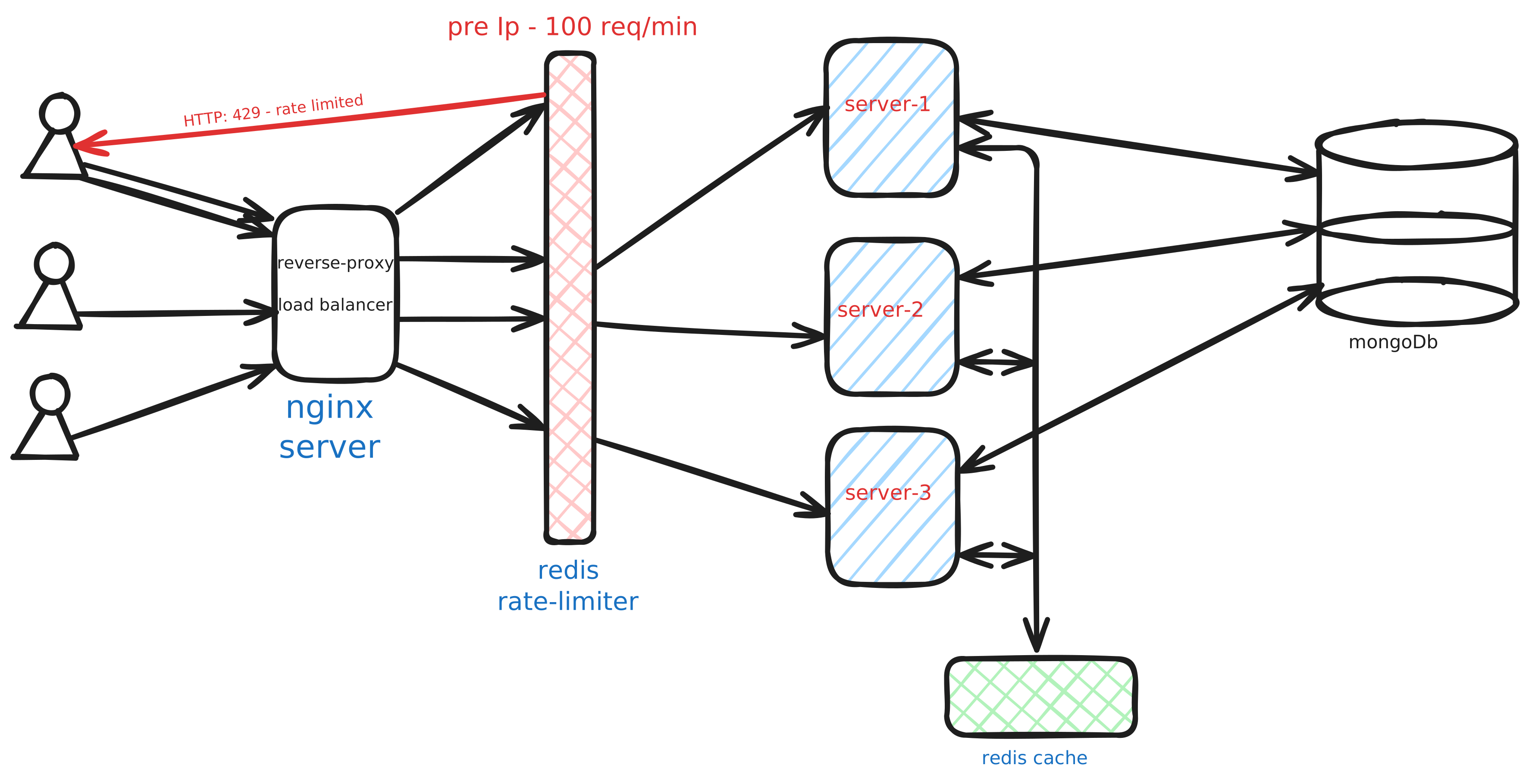
Main Components
1. Client Layer
Users interact with the system through a web interface where they submit long URLs and receive shortened URLs in return.
2. Load Balancer & Reverse Proxy (nginx)
The entry point to the system. The nginx server acts as a reverse proxy and load balancer that distributes incoming requests across multiple backend servers.
- Request routing to available servers
- SSL/TLS termination for secure connections
- Compression and caching of static assets
3. Rate Limiting Layer (Redis)
A dedicated Redis instance is used for rate limiting. It enforces 100 requests per minute per IP address.
4. Application Servers (Cluster)
Multiple backend servers run the core application:
- Horizontally scalable
- Stateless architecture
- Handle shortening and redirection
5. Caching Layer (Redis Cache)
- Fast retrieval of popular URLs (O(1))
- Reduced database queries
- TTL-based expiration
6. Database Layer (MongoDB)
- Stores URL mappings
- Tracks analytics and clicks
- Stores metadata
Data Flow
Creating a Short URL
- Client sends long URL
- NGINX receives request
- Rate limiter validates request
- Server generates short code
- Store in MongoDB
- Cache in Redis
- Return short URL
Accessing a Short URL
- User visits short URL
- Check Redis cache
- If miss → query MongoDB
- Cache result
- Increment click count
- Redirect user
Key Architectural Features
- Scalability: Horizontal scaling
- High Availability: Fault tolerance
- Performance: Redis caching
- Rate Limiting: Abuse protection
- Separation of Concerns: Dedicated layers
- Stateless Servers: Easy scaling
Architecture Benefits
- Handles high traffic efficiently
- Fast response times
- Resilient to failures
- Easy to scale
Technologies Used
- Backend: Express.js, NGINX, Redis
- Database: MongoDB
- Frontend: React.js
How to Use
Installation
git clone https://github.com/yourusername/url-shortener.git
cd url-shortener
cd backend
npm install
npm start
Usage
- Open frontend in browser
- Enter long URL
- Click shorten
- Copy short link
Environment Variables
PORT=3000
MONGO_URI=your_mongo_uri
BASE_URL=http://localhost:3000